
If you are planning a full re-roof, a loft conversion or a major renovation, someone will probably mention a temporary roof scaffold at some point. It might come up in a quote, a conversation with your architect, or a recommendation from your contractor. But what exactly is it, and does your project actually need one?
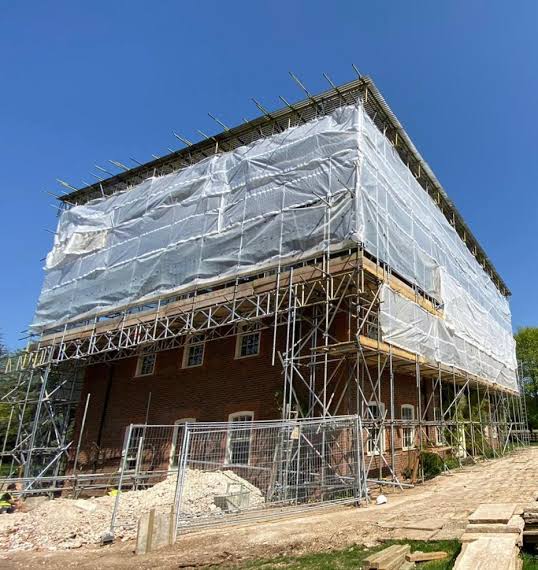
Temporary roof scaffolding, sometimes called a tin hat or temporary roofing scaffold, is a fully covered scaffold structure that creates a weathertight canopy over the work area. It is not standard scaffolding with a sheet of plastic draped over it. It is an engineered temporary roof in its own right, designed to keep the building watertight while the permanent roof is open or being replaced.
This guide explains how a temporary roof works, when it is the right call for your project, and what it delivers beyond simple weather cover.
How a Temporary Roof Scaffold Works
A temporary roof scaffold is built on top of a conventional scaffold structure using a system of aluminium or steel beams spanning the width of the building. Over those beams, rigid sheeting panels, purpose-made roof sheets or heavy-duty shrink wrap is fixed to create a continuous weathertight skin.
The structure is designed with a pitch so that rainwater runs off rather than pooling, and a drainage system channels water away from the building and off the scaffold safely. On larger projects, guttering is fitted to the perimeter of the temporary roof to manage heavy downpours.
The result is a fully enclosed working environment directly over the roof. Trades can work in most weather conditions without stopping. Materials stored beneath it stay dry. And critically, the fabric of the building, including any exposed timbers, insulation or structural elements, is protected from rain, frost and wind throughout the project.
The system is demountable and reusable, and can be adapted to different roof pitches and building footprints. A good scaffolding contractor will design the temporary roof to suit the specific geometry of your building rather than applying a one-size approach.
When Do You Need a Temporary Roof Scaffold?
Not every roofing job needs one. A straightforward repair, a section of tile replacement or minor maintenance work can generally be managed with standard scaffold and spot sheeting. But for any project where the roof will be fully or largely open to the elements for a sustained period, a temporary roof is usually the right approach.
Situations where a temporary roof scaffold is typically required or strongly recommended:
- Full re-roofing. When the entire roof covering is stripped back, the building is completely exposed. A temporary roof keeps the structure dry during what can be a multi-week programme of work.
- Major roof repairs and structural work. If roof timbers, rafters or structural elements need to be replaced or repaired, the opening created is too large and too long-lived to manage with sheeting alone.
- Loft conversions. The roof structure is significantly altered during a loft conversion, often over several weeks. A temporary roof protects the interior of the house, the insulation and the new structural elements while work is underway.
- Listed buildings and heritage properties. Exposed original timbers, historic fabric and period interiors are particularly vulnerable to water damage. A temporary roof is often specified by conservation officers or architects for listed building work as a condition of consent.
- New build and major renovation. On large renovation projects where the roof is taken back to structure, or on new builds where the frame is open during construction, a temporary roof protects new materials and keeps the programme moving regardless of the weather.
As a general rule, if your roof will be open for more than a day or two, or if there is any significant structural element exposed, a temporary roof scaffold is worth serious consideration. In the UK, waiting for a dry window is not a reliable strategy.

The Benefits: Weather Protection and Keeping the Project on Schedule
The most obvious benefit is keeping rain out. But the full case for a temporary roof scaffold is broader than that.
Protecting the building fabric. Water ingress during a roofing project can damage insulation, saturate new plasterwork, soak floor joists and create conditions for mould. A temporary roof eliminates that risk entirely. The cost of remedying water damage during a job almost always exceeds the cost of a temporary roof at the outset.
Protecting materials. Roofing materials, insulation boards, timber and fixings stored on site need to stay dry. A temporary roof means materials can be staged under cover, reducing waste and avoiding delays caused by damaged stock.
Keeping trades productive. Roofers, joiners and other trades cannot safely or effectively work on an exposed roof in heavy rain or high wind. Weather delays cost money and push back completion dates. A covered working environment means the programme runs as planned, regardless of what the weather is doing.
Peace of mind for the homeowner. Having an open roof over your home is stressful at the best of times. Knowing that a proper weathertight structure is in place, and that your house and its contents are protected throughout the project makes a significant difference.
For larger projects, the commercial scaffolding work we carry out for contractors and developers across Sussex and Kent often centres on temporary roofing as a core element of the programme from day one.
Temporary Roof vs Standard Scaffolding and Sheeting
It is worth being clear about what sets a temporary roof scaffold apart from standard weather protection, because the terms are sometimes used loosely.
Standard scaffold sheeting, typically polythene or mesh debris netting, provides basic protection from wind and light rain. It is adequate for work where the roof is not fully open, where the exposure period is short, or where you need to contain dust and debris rather than achieve a weathertight seal.
Shrink wrap is a step up from standard sheeting. It forms a tight, seamless skin over the scaffold and provides a reasonable level of weather protection for smaller jobs or shorter durations. It is often used on chimney stacks, bay roofs and smaller repairs where a full temporary roof would be disproportionate.
A full temporary roof scaffold is in a different category. It is a rigid, engineered structure with a proper pitch, drainage and the capacity to handle sustained heavy rainfall. It is not a cover; it is a working roof that happens to be temporary. For any project where the building must remain genuinely weathertight over weeks or months of work, this is the appropriate solution.
When you book a site visit with Grizzly Scaffolding, we will assess the scope of your project and give you a straightforward recommendation on which approach is right, from standard sheeting through to a full tin hat structure.
What Affects the Cost of a Temporary Roof Scaffold?
Temporary roof scaffolding costs more than a standard scaffold, which reflects the additional materials, engineering and installation time involved. The factors that most affect the overall cost are:
- The size of the roof. A larger footprint means more beams, more sheeting and a more complex structure.
- Roof pitch and geometry. Steeply pitched, irregular or multi-plane roofs require more bespoke detailing than a simple gable.
- Hire duration. Temporary roofs are typically quoted with a weekly or monthly hire element in addition to the erection and dismantling cost. Longer programmes cost more in hire, though the day-rate for an extended hire usually reduces.
- Access and site conditions. Restricted access, proximity to public land or the need for a highways licence can add to the cost and logistics of the project.
For a broader view of scaffolding costs across different project types, our UK scaffolding cost guide covers the key factors that affect your quote and what to expect at different price points.
Is a Temporary Roof Right for Your Project?
If your project involves a full or largely open roof for more than a couple of days, the UK climate will test it. A temporary roof scaffold is not an optional extra on jobs of that scale; it is the difference between a project that runs to schedule and one that stalls every time the weather turns.
Grizzly Scaffolding designs and installs temporary roof structures for homeowners, self-builders and contractors across East Sussex, West Sussex and Kent. We will assess your roof, recommend the right level of weather protection for the scope of work, and handle everything from the scaffold design to any permits required.
You can find more details on how we approach this type of work on our temporary roofing service page, or take a look at some of the projects we have completed to see the standard of work we deliver.
Ready to discuss your project? Book a free site visit, and we will give you a clear recommendation and a detailed quote.